ROI isn't just a number: The real value of Integrated Diagnostics in healthcare
When healthcare leaders talk about return on investment, the conversation often jumps straight to euros, pounds, or reimbursement codes. But ROI in healthcare is never that simple.
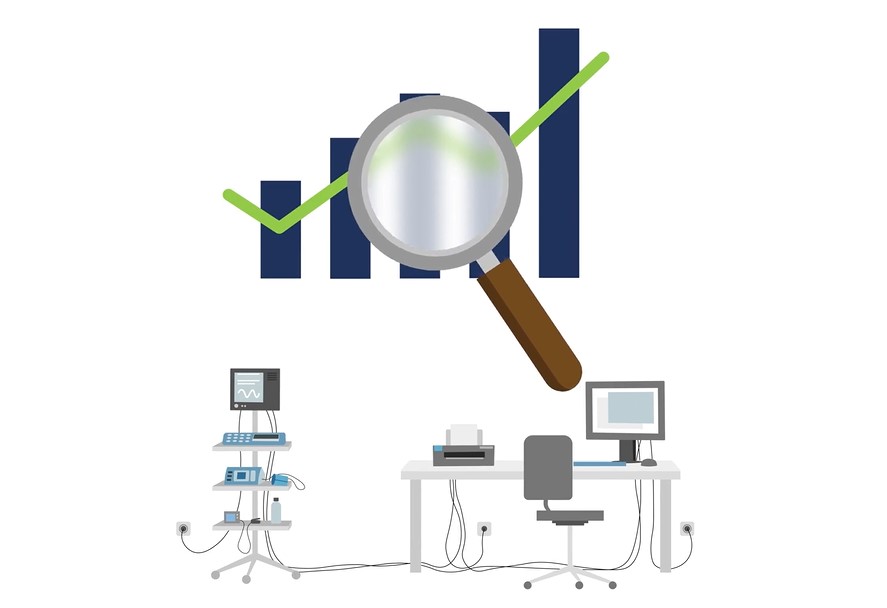
Return on investment, in its simplest financial form, compares the benefit of an investment against its cost and mostly in healthcare, we think about reimbursement when talking about ROI. But ROI isn’t just a number. It’s a story about time, capacity, outcomes and how a single piece of Integrated Diagnostic technology can help elevate care and strengthen business outcomes across an entire care pathway.
Beyond reimbursement only
In many healthcare systems, reimbursement is only part of the picture and sometimes barely part of it at all. In countries where diagnostic tests like ABI or spirometry aren’t separately reimbursed, the ROI conversation has to shift. To see the business, clinical and patient ROI aspect, here are the three main questions we need to ask ourselves:
How much clinical and administrative time does this free up? Time saved per test, workflow efficiency with automatic data storage and reporting, that adds up fast across hundreds of appointments.
How many more patients can be seen? When a 20-minute manual ABI measurement becomes a 5-minute automated one that’s not just faster appointments, it’s capacity. And capacity translates into shorter waiting lists, better access, and in private settings, real revenue.
How many repeat visits or escalations are avoided? Earlier, more accurate detection means fewer repeat measurements, fewer late-stage referrals that cost the system far more downstream and improved quality of care.
The Bigger Picture: Digitalisation and the healthcare workflow
Healthcare systems worldwide are under the same pressures with aging populations, staff shortages, rising chronic disease burden, and tighter budgets. Against that backdrop, digitalised, integrated diagnostic solutions aren’t a luxury; they’re becoming a structural necessity.
An integrated diagnostics platform like the MESI mTABLET doesn’t just digitase a single test, it combines multiple measurements, such as ABI, TBI, ECG, spirometry, vital signs, and more in one wireless device. It removes friction across the entire workflow: less manual charting, less duplicate data entry, fewer disconnected systems, and more time for the parts of care that actually need a clinician’s attention.
That’s the foundation for everything that follows.
ABI: The frontline of vascular risk detection
Ankle-Brachial Index testing is one of the most cost-effective tools for detecting peripheral artery disease (PAD) and yet it remains widely underused. The cost of that gap is significant, both for patients and health systems. The cost of delayed PAD diagnosis explores what happens when PAD goes undetected for too long and why earlier ABI screening changes that trajectory.
The value of ABI measurement isn’t theoretical. In Australia, real-world data demonstrated the proven clinical and economic value of routine ABI testing. Read the Australian case for the full picture.
Reimbursement models are starting to catch up too. In Italy, healthcare authorities moved to reimburse ABI measurement. And this is a signal that policymakers increasingly recognize its value. Read more in Italian healthcare to reimburse ABI measurement.
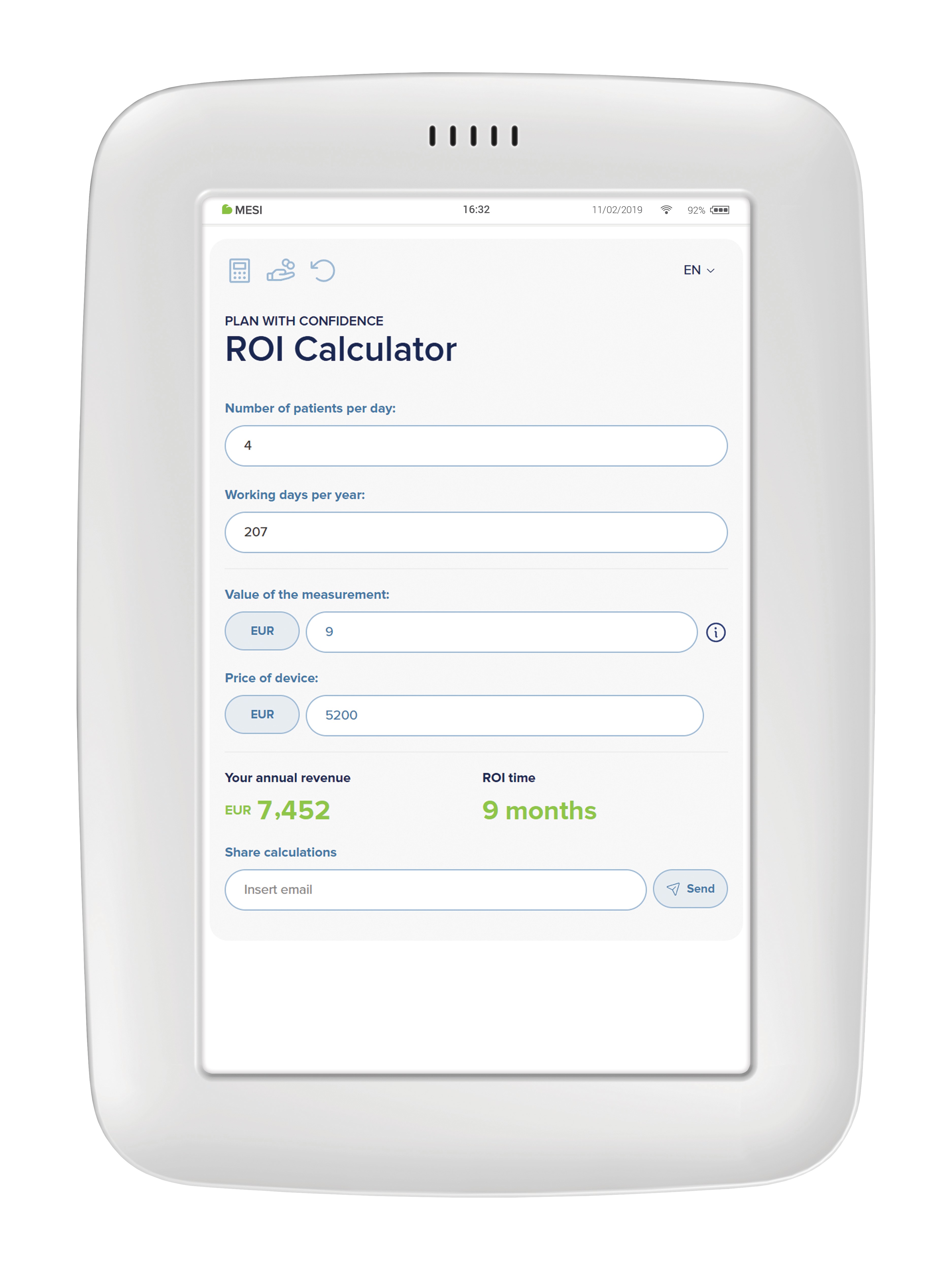
Curious what this could mean for your clinic? Try MESI’s ABI ROI calculator on the Ankle-Brachial Index measurement page to see the time and cost impact based on your own appointment volumes.
Telemedicine: Extending the reach of diagnostics
The shift toward remote and hybrid care models has changed what access to diagnostics means. Portable, wireless, integrated devices like the MESI mTABLET make it possible to bring high-quality vascular, cardiac, and respiratory testing into telemedicine settings. With this approach clinics are reducing cost and increase the number of patients that get care when they need it most without opening new centers. Challenges and trends in telemedicine looks at where this is heading and what it means for clinics and patients alike.
The Evidence: Cost-effectiveness and accuracy
Good ROI starts with good data. A study from the University of Helsinki examined the reliability and repeatability of the MESI mTABLET’s TBI measurement compared to Doppler, the traditional gold standard. The findings reinforce that automated, integrated measurement doesn’t mean compromising on clinical accuracy. Read the full study summary: Study by University of Helsinki finds high reliability and repeatability of the MESI mTABLET TBI compared to Doppler.
Real clinics, real results
Numbers on a page are useful, but nothing tells the ROI story better than clinics that have lived it.
In the UK, two GP practices stepped up their diagnostic capabilities with MESI’s integrated platform, transforming how they manage vascular and cardiac assessments in primary care. Read Philip Heiden’s experience: How two UK GP practices stepped up with MESI’s integrated diagnostics.
In Germany, Dr. Sanders’ practice went from facing real workflow challenges to running a noticeably more efficient operation. Read about their journey that illustrates exactly the kind of time-and-capacity ROI described above. From challenge to efficiency: Dr. Sanders’ journey with MESI’s integrated diagnostics in Germany.
The takeaway
ROI in healthcare is never just about the price tag on a device and the reimbursement value of the measurement. It’s about what that device enables - more time, capacity, earlier diagnoses, and ultimately, better outcomes for patients and the teams caring for them. When you connect the business case with the clinical case, the ROI conversation stops being a hurdle and becomes the strongest argument for change.
Want to see what this could look like for your practice? Explore the Ankle-Brachial Index measurement page and calculate your ROI today or get in touch with our team.