Clinical Webinar I Rethinking PAD detection: What’s changed, what’s next?
Clinical Webinar | PAD Awareness Month
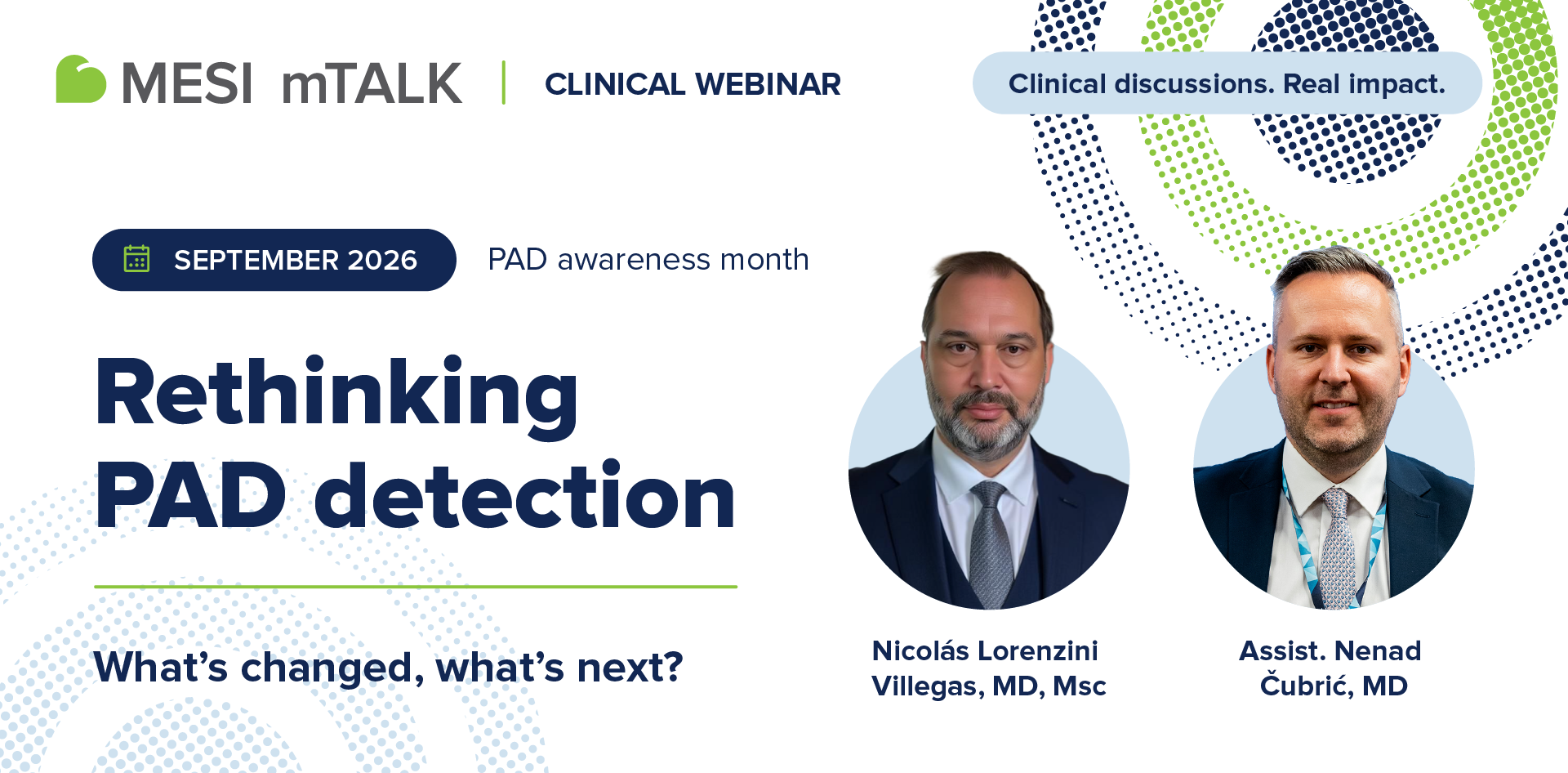
How has PAD detection changed, and what will it take to recognise the disease earlier?
From the methods used in the past to the diagnostic tools available today, this webinar explores how approaches to detecting peripheral arterial disease (PAD) have evolved. What has this meant for everyday clinical practice, why are opportunities for diagnosis still missed, and what should change next?
As part of PAD Awareness Month, this 60-minute mTALK clinical webinar brings together Dr Nicolás Lorenzini Villegas and Dr Nenad Čubrić, connecting the perspectives of primary care and vascular surgery.
Drawing on their clinical experience in Chile and Slovenia, the speakers will explore how PAD detection has evolved, why opportunities for earlier diagnosis are still missed, and what could help translate diagnostic capabilities into timely care. The discussion will cover recognising patients at risk, using diagnostic tools in everyday practice, and improving the pathway from initial assessment to specialist referral.
From past practice to today’s possibilities
How was PAD identified in the past, which diagnostic methods and technologies were used, and how have these approaches changed?
A look back at the evolution of PAD detection will set the context for a practical discussion about today’s tools and workflows. Beyond what technology can measure, the speakers will explore how vascular assessment fits into routine practice, how findings inform clinical decisions, and what is needed to translate diagnostic capabilities into timely action.
What we will discuss
The evolution of diagnosis: how methods, technologies and approaches to PAD detection have changed over time.
Why PAD is missed: where opportunities for recognition and assessment can be overlooked.
Recognising risk earlier: how to identify patients who may benefit from further vascular assessment.
Connecting primary and specialist care: where communication and referral gaps arise, and what each level of care needs from the other.
What’s next for PAD detection: what needs to change in diagnostic practice, access to assessment and referral to support earlier recognition and timely care.
Who should attend?
This webinar is intended for primary care physicians, vascular specialists, nurses and other healthcare professionals involved in cardiovascular risk assessment and the care of patients at risk of PAD.
The session will conclude with a live Q&A, offering participants the opportunity to discuss their questions with both speakers.
Meet the speakers
Nicolás Lorenzini Villegas, MD, MSc
Physician · Head of the Minor Surgery Programme
CESFAM N.º 6 “Ignacio Caroca”, CORMUN, Rancagua, Chile
Dr Nicolás Lorenzini Villegas has more than 20 years of experience in primary health care. He graduated in Medicine from the University of Chile and holds a Master’s degree in Medical Sciences (Surgery) from the University of La Frontera.
Since 2004, he has led the Minor Surgery Programme he founded within the Municipal Health Corporation of Rancagua. His clinical and research work focuses on advanced wound care, diabetic foot care, venous leg ulcers and pressure injuries. He brings practical experience in PAD screening and early diagnosis in primary care.
Assist. Nenad Čubrić, MD
General Surgery Specialist · Department for Vascular and Endovascular Surgery
University Medical Centre Maribor, Slovenia
Dr Nenad Čubrić is a General Surgery Specialist at the Department for Vascular and Endovascular Surgery, University Medical Centre Maribor. His clinical work focuses on the treatment of peripheral arterial disease, venous disease and complex vascular conditions.
Combining surgical expertise with structured diagnostic assessment, he emphasises how objective data can support more precise treatment decisions and improved patient outcomes. He brings the specialist perspective on PAD assessment and treatment to the discussion, connecting diagnostic findings with decisions about further care.
Join the discussion on what has changed in PAD detection and what needs to happen next.
30 September 2026 | 15:00 CEST | Online
REGISTER NOW